01
Decode, don’t wrap
We decode the device’s wire format rather than working through a vendor SDK, so the device’s full capability is available to the stack. The radar is integrated this way.
Most operators already have a hull, an engine, a radar and a chart plotter that work. Our work is to make them interoperate and then to make the vessel autonomous, integrating at the protocol level.
We decode the device’s wire format rather than working through a vendor SDK, so the device’s full capability is available to the stack. The radar is integrated this way.
Working vessels have networks that already exist, with segments and firewalls someone chose for a reason. Our software runs inside them rather than asking for them to be flattened.
NMEA 0183 and NMEA 2000, and open robotics middleware. A proprietary path is a last resort, and when we take one we document it so the next integrator is not starting from zero.
| Category | System | Depth of integration |
|---|---|---|
| Marine radar | A commercial marine radar | Protocol level: live image stream, ARPA targets, own-ship feed, and full control. |
| Own-ship data | NMEA 2000 compass and GPS | We build the 10 Hz heading, position and course feed ourselves and supply it to the radar. |
| Propulsion | Outboard engine control | CAN / NMEA 2000, so the stack reaches the actual throttle and steering. |
| Navigation framework | Open robotics middleware | The autonomy stack is built on it rather than beside it. |
| Video | RTSP / HLS / WebRTC | Proxied to shore, pulled on demand rather than held open. |
| Telemetry | Our own protocol | Over UDP, into the shore station’s fleet view. |
This table lists systems already integrated. It does not list systems we expect to be able to integrate. If what you need is not here, ask.
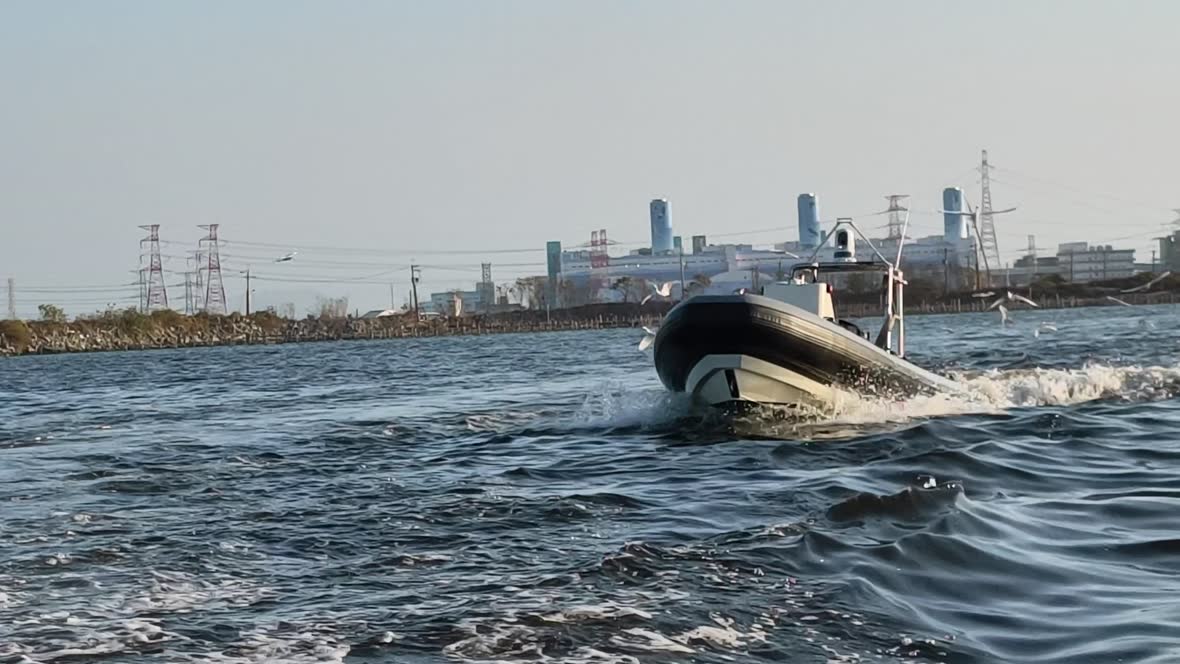 Harbour sea trial · 2026