Camera-radar fusion
The camera classifies what it sees; the radar measures range. Both run on the vessel, and their outputs are fused into a single contact.
-
Fusion
Range always comes from the radar
A vessel seen by the camera is shown with the radar’s range — never with a range inferred from the image alone. -
Shore link
Live video to the ground control station
Pulled on demand rather than held open, so a fleet does not cost a stream per vessel around the clock.
What we do not claim
No detection distance. No accuracy or recall percentage — the detector’s confidence is an uncalibrated model score, not a probability. No all-weather, night or thermal performance. No person-in-water detection. No collision avoidance driven by vision.
Shore buildings, backlit quays and oyster racks are still detected as vessels at times.
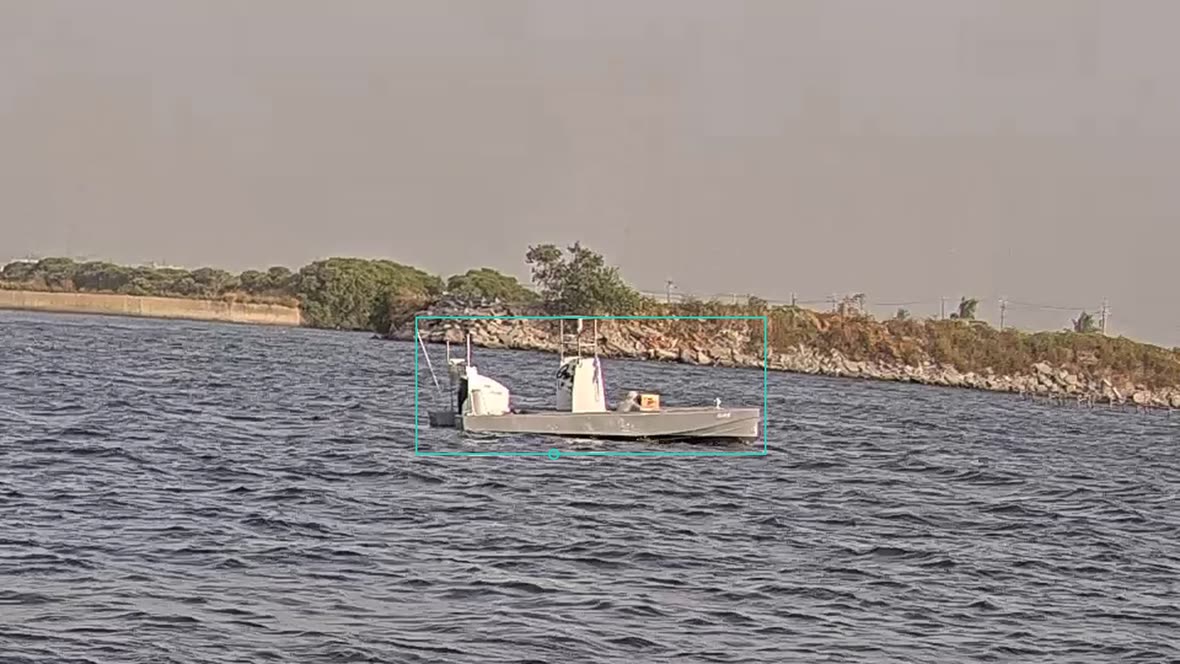 Camera and radar, fused
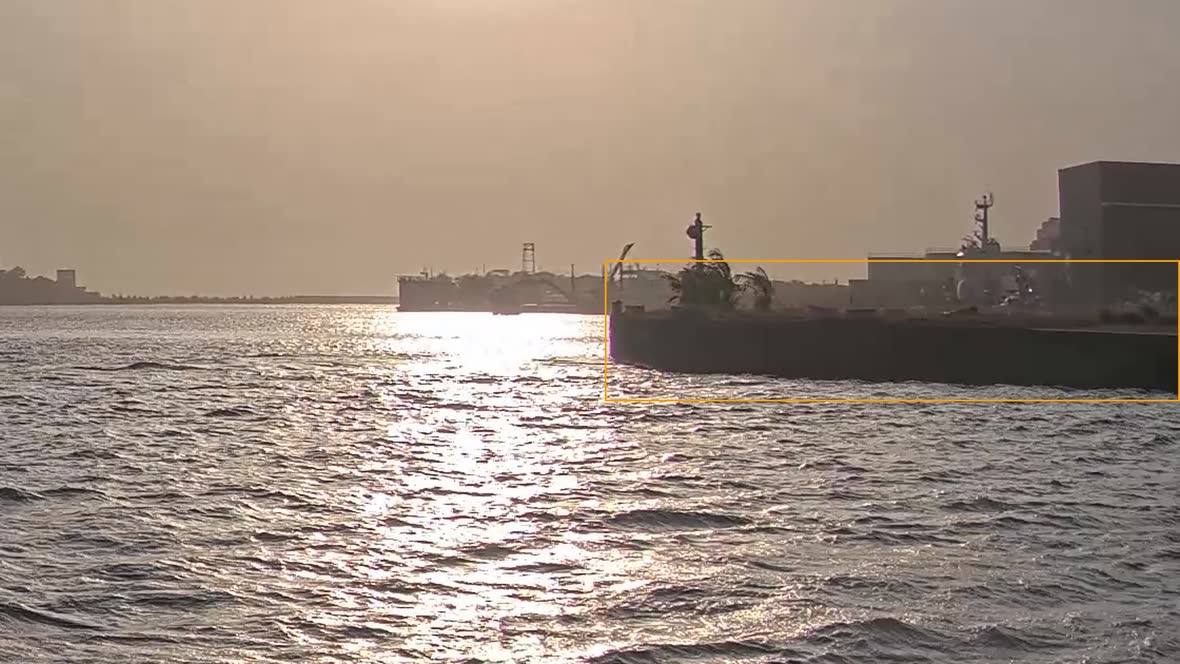 False positive